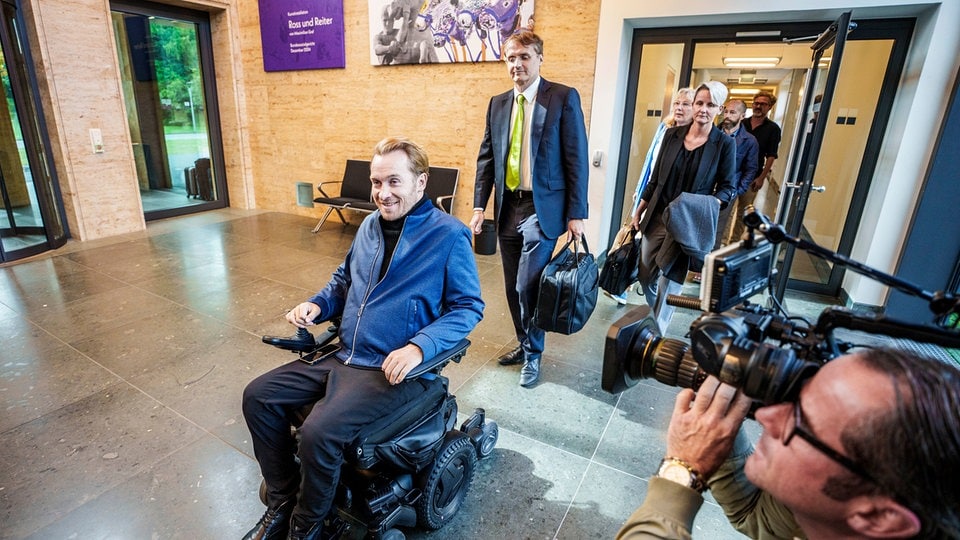
The Wetten, dass..? Lawsuit: A Landmark Case Examining Insurance Coverage for TV Stunts
The world of live television thrives on spectacle, pushing boundaries to captivate audiences. But what happens when the spectacle goes tragically wrong? This question lies at the heart of an ongoing legal battle in Germany, centered around the severe accident involving Samuel Koch on the popular ZDF show "Wetten, dass..?" in December 2010. The case, now before the Federal Social Court (Bundessozialgericht – BSG) in Kassel, isn't just about a past tragedy; it's about setting a crucial precedent for insurance coverage, participant safety, and liability within the entertainment industry. For nearly 15 years, Samuel Koch has lived with the devastating consequences of that night, and his fight for recognition under accident insurance law highlights the complex interplay between daring stunts and the safety nets designed to protect individuals.
The Tragic Evening: Recalling the Samuel Koch Unfall
On December 4, 2010, millions of viewers across Germany and beyond tuned into "Wetten, dass..?", a beloved Saturday night entertainment show renowned for its audacious challenges. Samuel Koch, then a 23-year-old sports student and aspiring actor, was a contestant attempting a daring stunt: he aimed to jump over five moving cars using spring-loaded stilts, or "jumping stilts." The atmosphere was electric, but the challenge proved too great. Koch misjudged a jump over the fourth car, lost control, and fell headfirst onto the studio floor. The live broadcast was immediately interrupted, and the gravity of the situation became clear.
The Samuel Koch's Wetten, dass..? Accident: 15 Years, Paralysis, and Court resulted in a severe spinal cord injury, leaving Samuel Koch paraplegic. His life, and the perception of live TV stunts, changed irrevocably that night. Despite his debilitating injuries, Koch has shown incredible resilience, pursuing a career as an author, actor, and motivational speaker. Yet, the physical and financial burdens of his condition are immense, making the question of accident insurance coverage critically important. The incident, widely referred to in German media as the Samuel Koch Unfall, sparked widespread debate about the safety standards of reality television and the ethical responsibilities of broadcasters.
The Heart of the Matter: Insurance Coverage for TV Stunts
The core of Samuel Koch's legal challenge revolves around a fundamental question: was he, as a contestant performing a stunt on a live television show, considered to be "working" in a capacity that would entitle him to coverage under Germany's statutory social accident insurance scheme? This isn't a simple question of private insurance, which Koch likely had to some extent, but rather about the public safety net designed to protect employees from work-related accidents and occupational diseases.
In Germany, the statutory accident insurance (gesetzliche Unfallversicherung) covers employees, students, and certain other groups for injuries sustained during work, school, or directly related activities. The key legal hurdle for Koch's case is whether his participation in "Wetten, dass..?" can be classified as an activity comparable to employment. Traditional definitions of employment often involve a contractual relationship, remuneration, and subordination to an employer. For TV contestants, particularly those not professional stunt performers, these lines can be blurred. Was he a performer, an independent contractor, a guest, or something else entirely?
The Bundessozialgericht (BSG) in Kassel, as the highest court for social law matters in Germany, is tasked with interpreting these complex legal distinctions. Their decision will not only impact Samuel Koch but could also establish a significant precedent for how TV participants are classified and protected in the future. The implications extend far beyond "Wetten, dass..?", affecting reality TV shows, game shows with physical challenges, and any program where non-professional individuals are asked to perform potentially dangerous acts for public entertainment.
- Broadcaster's Responsibility: The case scrutinizes the responsibility of the broadcasting company (ZDF) and the production company in ensuring the safety and adequate insurance coverage for participants.
- Definition of "Work": The court must decide if the preparatory activities and the actual performance of the stunt constitute "work" in the legal sense, thereby triggering social accident insurance.
- Waivers vs. Rights: While participants often sign waivers, these cannot always absolve producers of all responsibility, especially concerning mandatory social insurance rights.
Distinguishing Between Risk and Responsibility
In the high-stakes world of live television, a fundamental tension exists between the desire for thrilling content and the imperative of participant safety. The Samuel Koch Unfall brought this tension to the forefront, forcing a re-evaluation of how risk is managed and who ultimately bears responsibility when things go wrong.
For broadcasters and production companies, risk assessment is paramount. This includes everything from the design of a stunt to the equipment used, the training provided, and the medical personnel on standby. However, the legal and ethical landscape surrounding "volunteers" or "contestants" is intricate. While participants willingly accept certain risks, there's an expectation that organizers will maintain a reasonable duty of care. This expectation becomes particularly pronounced when the participants are not professional stunt artists, but rather members of the public seeking a moment in the spotlight.
From the participant's perspective, understanding contracts and insurance provisions is crucial. Many contestants, especially in the excitement of the moment, may not fully grasp the long-term implications of potential injuries or the limitations of any insurance offered by the production. This case highlights the need for clear, unambiguous communication regarding what type of insurance coverage, if any, is provided and what responsibilities lie with the participant. This is why cases like Samuel Koch Court Case: Was his Wetten, dass..? Stunt Insured? are so vital for future clarity.
Broader Implications for the Entertainment Industry
The outcome of the Samuel Koch lawsuit at the Bundessozialgericht is poised to have far-reaching implications for the entire entertainment industry, not just in Germany but potentially internationally, as broadcasters grapple with similar ethical and legal challenges. A ruling in Koch's favor could necessitate a fundamental shift in how TV productions view and treat their contestants, particularly those involved in physically demanding or dangerous stunts.
Potential Changes for Broadcasters and Production Companies:
- Enhanced Insurance Requirements: Productions might be compelled to provide more comprehensive accident insurance, potentially classifying participants as temporary workers for the duration of their involvement, thereby extending social accident insurance coverage. This would significantly increase costs but also provide a vital safety net.
- Rethinking Stunt Safety: There could be a stricter review of stunt design and execution, with a greater emphasis on professional stunt coordinators and rigorous safety protocols, even for seemingly "simple" challenges.
- Clearer Contracts and Communication: Contracts for contestants would likely need to be far more explicit about the nature of participation, the risks involved, and the exact scope of any insurance coverage provided. Legal counsel for participants might become more common.
- Reputational Risk: Beyond legal costs, broadcasters face significant reputational damage from participant injuries. This case underscores the need for robust ethical guidelines to protect both participants and the public trust.
Advice for Aspiring Participants in TV Stunts:
- Read Every Word: Thoroughly review all contracts, waivers, and release forms. Do not sign anything you don't fully understand.
- Seek Legal Counsel: If a stunt involves significant risk, consult an independent lawyer to review the terms and clarify your rights and any provided insurance coverage.
- Inquire About Insurance: Explicitly ask about the type and extent of accident insurance provided by the production. Understand what is covered, for how long, and what limitations exist.
- Assess Your Limits: Be honest with yourself and the production team about your physical capabilities and comfort level. No amount of fame is worth a life-altering injury.
- Professional Stunt Performers: If you are a professional stunt performer, ensure your own comprehensive professional liability and accident insurance is in order, and that it covers the specific risks of the stunt in question.
Conclusion
The Samuel Koch lawsuit is more than just a legal dispute; it's a poignant reminder of the human cost behind televised entertainment. Samuel Koch's unwavering spirit in the face of immense adversity has made him a powerful advocate, and his legal battle at the Bundessozialgericht is a testament to his determination. The court's ruling will not only determine his future access to essential benefits but also shape the landscape of participant safety and insurance in the global entertainment industry. It forces a critical examination of where the line is drawn between voluntary participation and protected activity, ensuring that the pursuit of captivating television doesn't come at the expense of human well-being. As the legal proceedings continue, the world watches to see how this landmark case will redefine responsibility in the age of televised spectacle.